
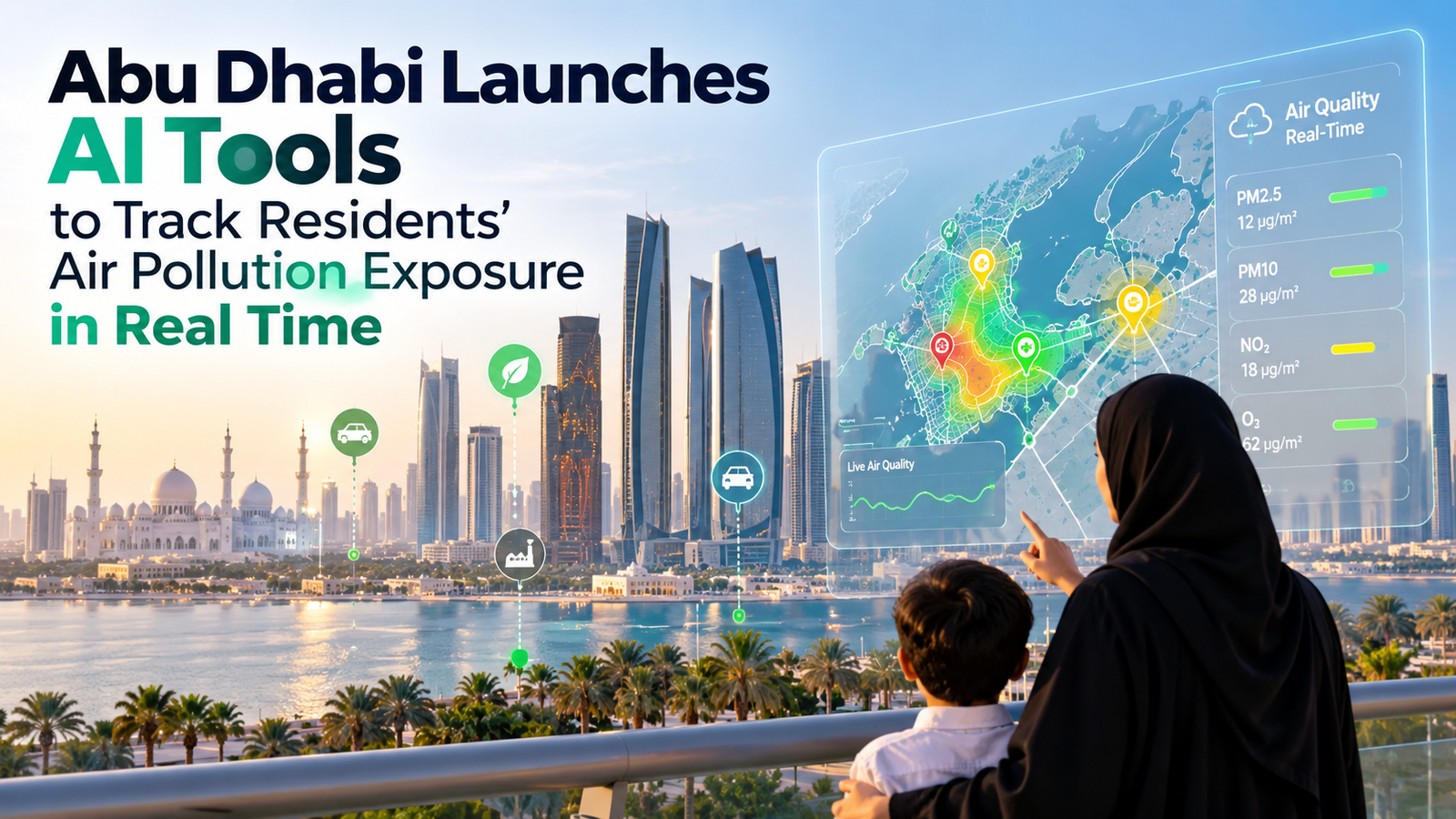
Abu Dhabi is adopting a new approach to monitor air pollution. By utilizing artificial intelligence, the system not only identifies pollution sources but also assesses the level of pollution exposure people might face while moving around the city.
This new system, known as ‘Exposure AI,’ provides real-time data on pedestrians’ exposure to pollution generated by traffic. Developed through a partnership between Abu Dhabi’s Department of Municipalities and Transport (DMT) and MIT’s Senseable City Lab, the technology aims to provide more detailed insights into people’s daily exposure to traffic-related pollution.
What Is Exposure AI?
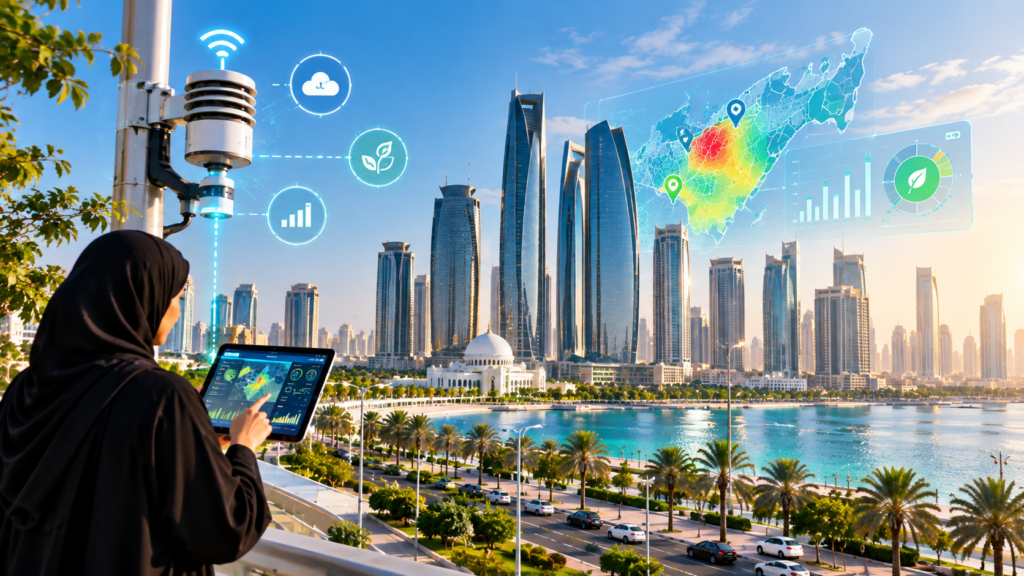
Traditional air quality monitoring stations measure pollution at fixed locations. While these stations provide essential data, they primarily offer information about conditions at specific monitoring points.
Exposure AI takes a different approach.
This technology tracks pedestrians in the city and builds a picture of the pollution they might encounter during their journeys.
This can help officials understand where people are exposed to traffic fumes and how that exposure changes as they move from one place to another.
How Does Emission AI Work?
Exposure AI works in conjunction with another technology called ‘Emission AI’.
Instead of focusing on pedestrians, Emission AI focuses on vehicles. This system uses artificial intelligence to analyze dashcam footage and determine the level of pollution emitted by different vehicles.
This enables planners to identify the specific roads, traffic patterns, and vehicle types that generate higher levels of pollution.
Together, these two AI tools combine two crucial pieces of information: where traffic-related pollution is occurring and where people are being exposed to it.
Why Is This Different From Traditional Air Monitoring?
Traditional monitoring stations provide a snapshot of air quality in the immediate vicinity of their fixed locations.
However, people do not stay in one place all day.
They walk along roads, cross intersections, and pass through areas with varying traffic conditions. Exposure AI was designed to capture this dynamic experience.
Instead of simply asking, “How polluted is this location?”, the system helps answer a more specific question: who is being exposed to traffic-related emissions, and where is that exposure occurring?
Research Behind Abu Dhabi’s AI Technology
This technology was developed based on research using data from Abu Dhabi.
A study on the use of AI and video footage to estimate vehicle emissions was published in ‘Communications Engineering’ in September 2026.
Prior to this, a framework paper was published in ‘Nature Sustainability’ in April 2026, in which DMT was recognized as a consortium supporter.
This research was also presented at the MIT Senseable City Lab global conference during the 2025 Venice Biennale, attended by representatives from 48 partner institutions worldwide.
What Could Come Next?
The collaboration between DMT and MIT’s ‘Senseable City Lab’ is now expanding into other areas of urban planning.
A new agreement under LIVEX 2026 has paved the way for further research within the DMT Future Hub.
Two projects—’Trees in My Backyard’ and ‘Re-Leaf’—aim to explore how AI can assist in planting trees in areas with high heat and pollution levels.
Another initiative, ‘Stellar Oasis’, will focus on addressing light pollution in Abu Dhabi.
The overarching goal is to leverage data and artificial intelligence to help planners gain a precise understanding of environmental conditions.
Frequently Asked Questions
What is Exposure AI?
Exposure AI is a tool designed to track pedestrians’ exposure to traffic-related emissions in real time as they move around Abu Dhabi.
What is Emission AI?
Emission AI analyses dashcam footage and uses artificial intelligence to estimate emissions from individual vehicles.
Who developed the technology?
The tools were developed through collaboration between Abu Dhabi’s Department of Municipalities and Transport and MIT’s Senseable City Lab.
How is it different from normal air-quality monitoring?
Traditional stations monitor pollution at fixed points. Exposure AI is designed to examine how pollution exposure changes as pedestrians move through different parts of the city.
Will AI also be used for other environmental projects?
According to the announced research plans, future projects could use AI to guide tree planting in areas affected by heat and pollution, while another initiative will examine light pollution.
Final Thoughts
Abu Dhabi’s latest AI initiative shifts air-quality monitoring from simply measuring pollution at fixed locations toward understanding how residents may experience that pollution during everyday movement.
By combining pedestrian exposure data with estimates of vehicle emissions, authorities could gain a clearer picture of where traffic-related pollution is concentrated and where people encounter it most.
The next stage goes beyond measurement. With AI-assisted tree planting, heat-related research and light-pollution projects planned, the same data-driven approach could increasingly influence how Abu Dhabi designs and manages its urban environment.
also read: Abu Dhabi