

Dubai is preparing to introduce clearer rules governing how artificial intelligence, smartphones, tablets and other digital technologies can be used by students in schools and educational institutions.
The Knowledge and Human Development Authority (KHDA), Dubai’s education regulator, is currently developing a policy that will provide schools, teachers, students and parents with clearer guidance on when technology should be used for learning and when its use should be restricted.
Aisha Abdulla Miran, Director General of KHDA, said the authority expects the new policy and accompanying standards to be ready by next year.
The central idea behind the framework is that technology should support education rather than become a distraction. KHDA wants artificial intelligence and digital devices to be introduced only when they genuinely improve a student’s learning experience.
Why Is Dubai Preparing New Rules?
The rapid adoption of AI tools, smartphones, tablets, and other devices has transformed education globally. Students can now access information, learning apps, and AI-powered tools in mere seconds.
However, this shift has also raised concerns regarding increased screen time, the misuse of devices, student safety, and whether technology consistently improves learning outcomes.
The KHDA aims for schools in Dubai to have a clear framework to address these challenges.
According to Miran, the authority does not want technology to be adopted simply because it is available. Instead, schools should determine whether a specific digital tool genuinely enhances the learner’s educational experience.
Therefore, the policy is expected to outline scenarios where technology is beneficial, as well as situations where traditional learning methods might be more appropriate.
What Will the New Policy Cover?
The proposed framework will encompass a wide range of digital technologies used by students.
This includes Artificial Intelligence (AI) tools, mobile phones, iPads, and other electronic devices that can be utilized within the classroom or for academic activities.
A key question addressed by this policy will be determining the appropriate age or stage for students to begin using these technologies.
The KHDA will examine the students’ entire educational journey to decide which digital tools should be used at specific stages.
The authority will also consider scenarios where the use of these technologies should be restricted.
This means the framework can assist schools in determining when AI or tablets genuinely enhance learning, and when students might benefit more from traditional methods—such as handwriting, textbooks, and face-to-face classroom interaction.
AI Must Serve Students, Not Replace Learning
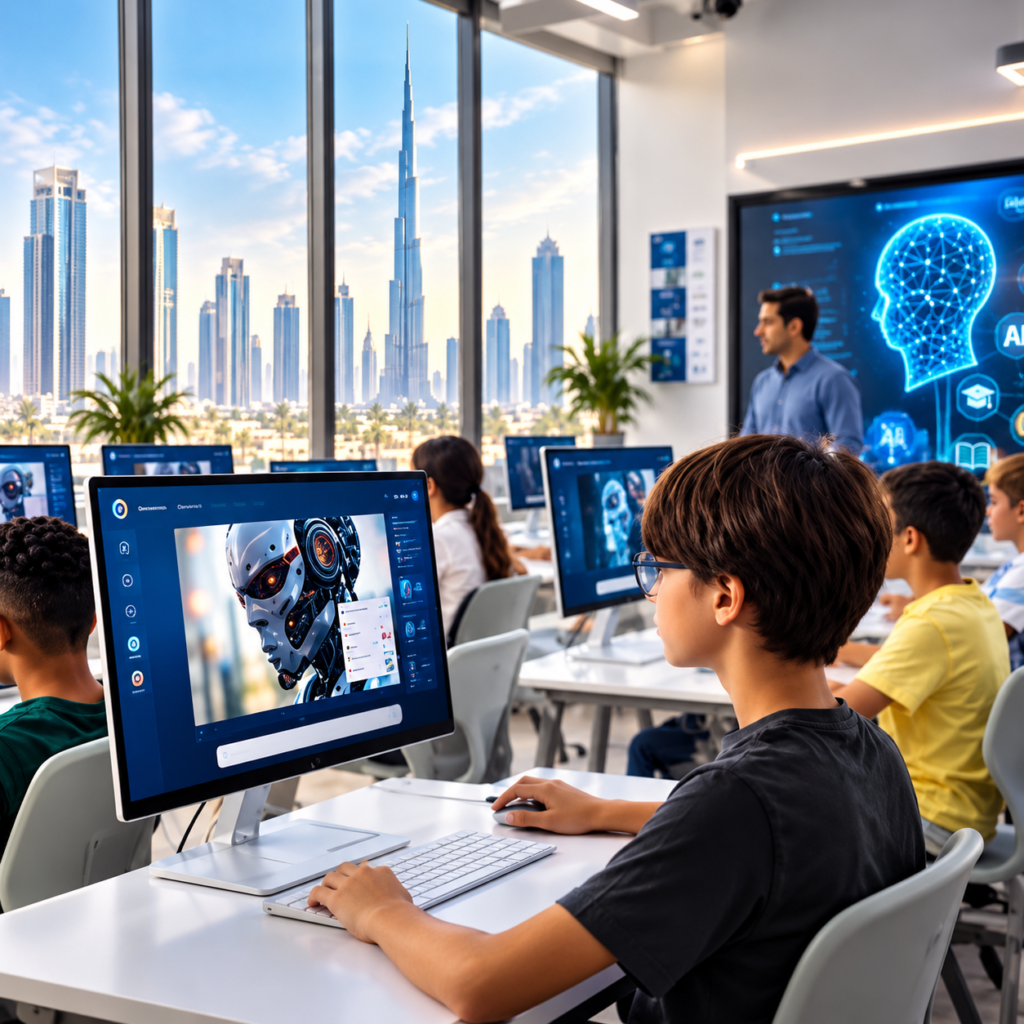
Artificial Intelligence (AI) is expected to be a key element of the upcoming policy.
The KHDA’s core principle is that AI should serve as a means to enhance education, rather than being an end in itself.
Miran described technology as a tool to achieve an objective, with the ultimate goal being to improve the learner’s experience.
This approach implies that schools could be encouraged to evaluate AI tools based on their educational value.
The policy is expected to establish guidelines for the responsible use of AI while also introducing measures to ensure student safety.
The KHDA aims for students to benefit from technological innovations without becoming overly dependent on digital tools.
Student Safety Will Remain a Major Priority
Child safety will be a key component of this policy.
As AI and digital devices become increasingly common in education, the KHDA wants schools to understand both the opportunities and the risks associated with technology.
The authority aims to establish safety measures and regulations that help schools strike a balance between innovation and student safety.
Different rules may be appropriate for children of different ages.
For instance, younger children might require stricter restrictions and closer supervision, whereas older students could be permitted greater use of digital tools, provided those tools directly support their learning.
Therefore, this framework is expected to address not only the types of technology students use but also when and how they use them.
Parents Will Share Responsibility
The KHDA has emphasized that the responsibility for managing children’s technology use cannot rest solely with schools.
Schools may restrict screen use during class hours, but if a child spends several hours using an iPad, smartphone, or other device after returning home, the impact of those restrictions may be diminished.
Therefore, the KHDA advocates for collaboration among parents, schools, and government officials.
The regulator is working with the Dubai Digital Authority on initiatives related to digital balance and responsible technology use.
Part of this effort involves raising awareness among parents regarding screen time.
It is hoped that webinars, posters, and other awareness initiatives will help parents understand how digital habits outside of school can affect children.
Schools Could Get Greater Accountability
Another key aspect of Dubai’s approach is the significant role that individual schools will play.
Rather than imposing rigid restrictions on every decision, the KHDA appears to favor granting schools a degree of flexibility, while simultaneously expecting them to use technology responsibly.
Therefore, it is expected that schools will implement the broad principles established by the KHDA while also adopting approaches best suited to their students.
Teachers may also receive clear guidelines regarding scenarios where AI and devices can enhance the classroom learning process.
The aim is to ensure that digital tools are used thoughtfully and deliberately, rather than automatically or without due consideration.
When Will the New Rules Take Effect?

The KHDA is currently preparing guidelines and standards for this policy.
Miran stated that the authority expects the policy and standards to be ready by next year.
Until the final framework is released, details such as age limits, restrictions on specific AI tools, or precise rules regarding mobile phones remain undecided.
It is expected that the final policy will provide clear information on these matters.
Frequently Asked Questions
What is the KHDA planning for Dubai schools?
The KHDA is formulating a policy regarding the responsible use of AI, mobile phones, iPads, and other digital technologies in schools and educational institutions.
Will there be a ban on AI in Dubai schools?
The proposed approach does not focus on banning AI. Instead, the KHDA aims to ensure AI is used only when it genuinely supports student learning and is accompanied by appropriate safeguards.
Will there be a complete ban on mobile phones?
A total ban has been discussed, but the KHDA favors an approach that grants schools accountability, responsibility, and a degree of flexibility.
Will there be stricter rules for younger children?
The policy will consider students’ stages of learning to determine when the use of technology should be introduced and which safeguards are appropriate.
Will parents also have a role to play?
Yes. The KHDA has emphasized that collaboration among schools, parents, and government officials is essential for the responsible use of screens.
When will the policy be ready?
The KHDA expects the new policy and standards to be ready by next year.
Final Thoughts
Dubai’s upcoming policy seeks a middle ground in the ongoing debate regarding technology in education. Instead of choosing between unrestricted digital access and a total ban, the KHDA advocates for the use of AI, smartphones, and other devices only when they genuinely enhance the learning process.
At the same time, student safety, responsible screen usage, and parental involvement will remain central to this framework.
The broader objective is not merely to make Dubai’s classrooms more technologically advanced, but to ensure that students learn to use technology wisely, ethically, and responsibly—both inside and outside the classroom.